logo

New ECG workstation

Design of a new, modern, and optimized workstation, aligning clinical needs, operational efficiency, and technological advancements at Micromed.

YEAR

2024

COMPANY

Micromed

ROLE

Research

User interviews

Journey maps

Data analysis

UI

Prototyping

Usability tests

Reffining

Beta testing

Follow UP

01.

Overview

Micromed is a leading player in cardiology in Brazil. This project involved the complete replacement of the legacy Thundera platform with a new workstation for medical reports. The goal was to modernize the technology and, most importantly, to solve critical usability issues that impacted medical efficiency.

+1200

Users doctors

2.5mi

Exams per year

+450

Centers reporting exams

02.

The Challenge

In cardiology, "time is muscle". Doctors deal with thousands of exams daily, and every second saved in the reporting process directly impacts patient response time.

The Problem

The previous platform presented:

  • Legacy Technology: Difficulty and high cost to implement improvements.
  • Workflow Friction: An average of 6 clicks to perform a simple report.
  • Cognitive Load: Outdated interface, making it difficult to prioritize critical exams.
  • Instability: Frequent logouts required repetitive authentication workflows.

Key Metric: Reduce the average reporting time while maintaining clinical safety.

Key Metric: Reduce the average reporting time while maintaining clinical safety.
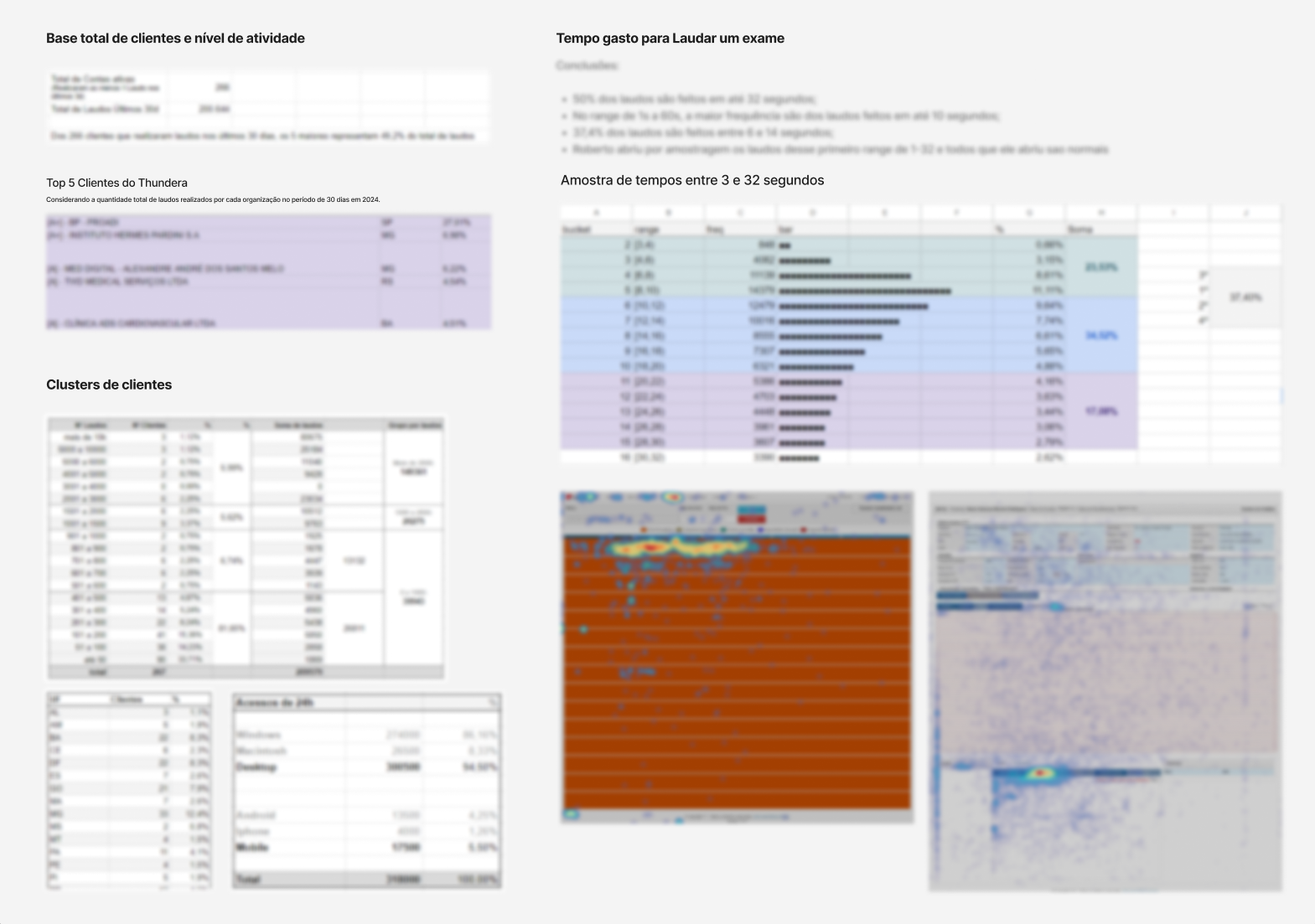
data analysis

(Data dashboard in Figjam with charts, heatmaps, and key usage numbers.)

03.

Discovery Process

We began with a deep dive into the telemedicine ecosystem, visiting and interviewing doctors at reference institutions: Albert Einstein, Beneficência Portuguesa (BP), InCor, and Samaritano.
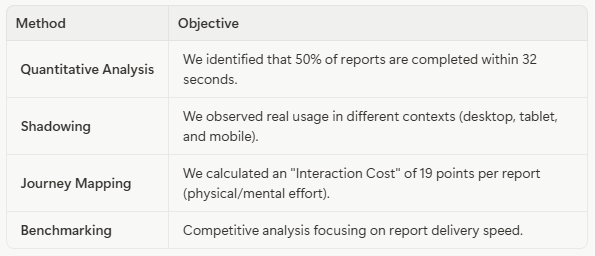
table discovery methods

User interviews

8

Users interviewed

4

Hospitals visted

5

Days shadowing
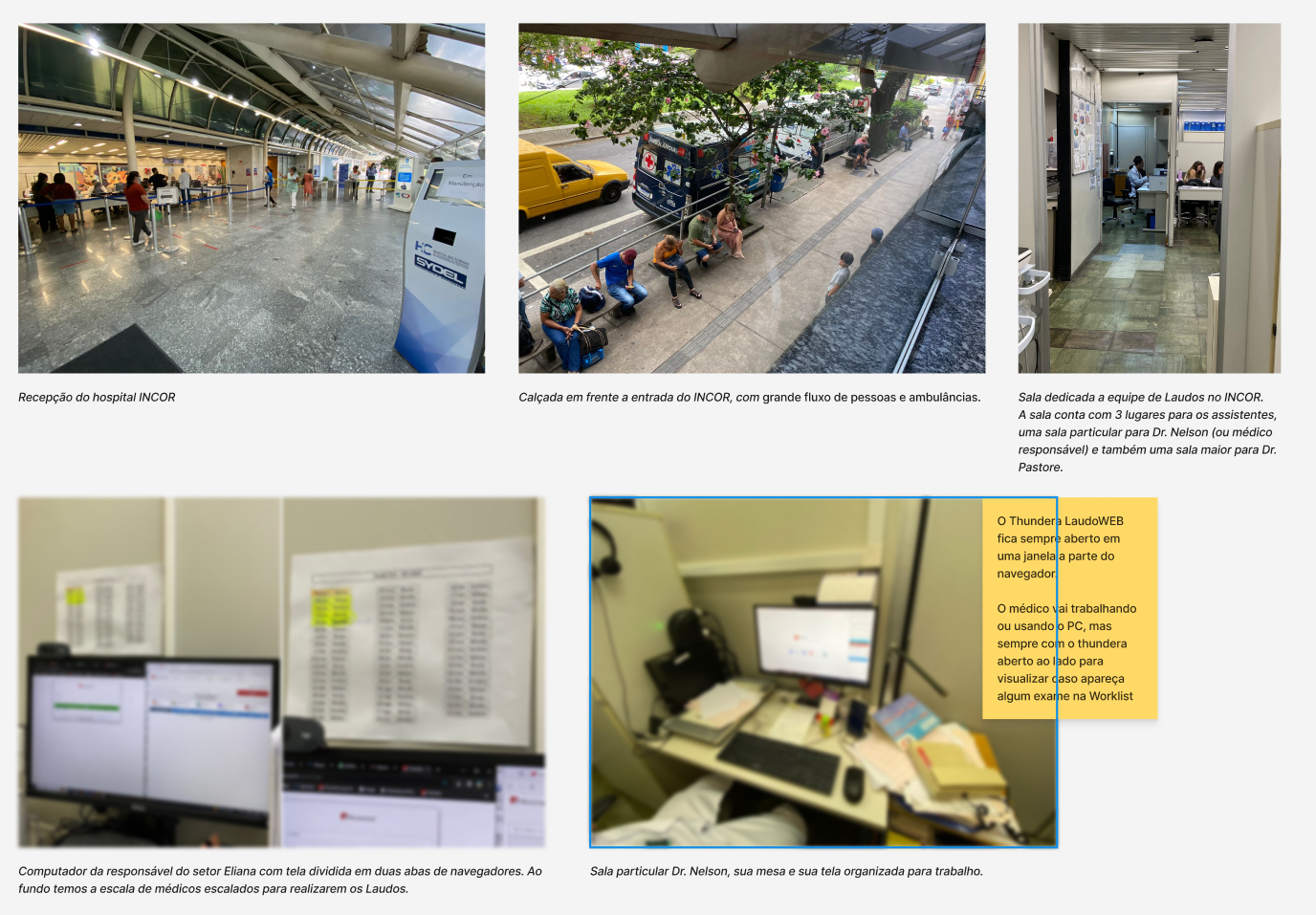
images of interviews

(Photos of hospitals visited, showing staff rooms and desks/work environment)
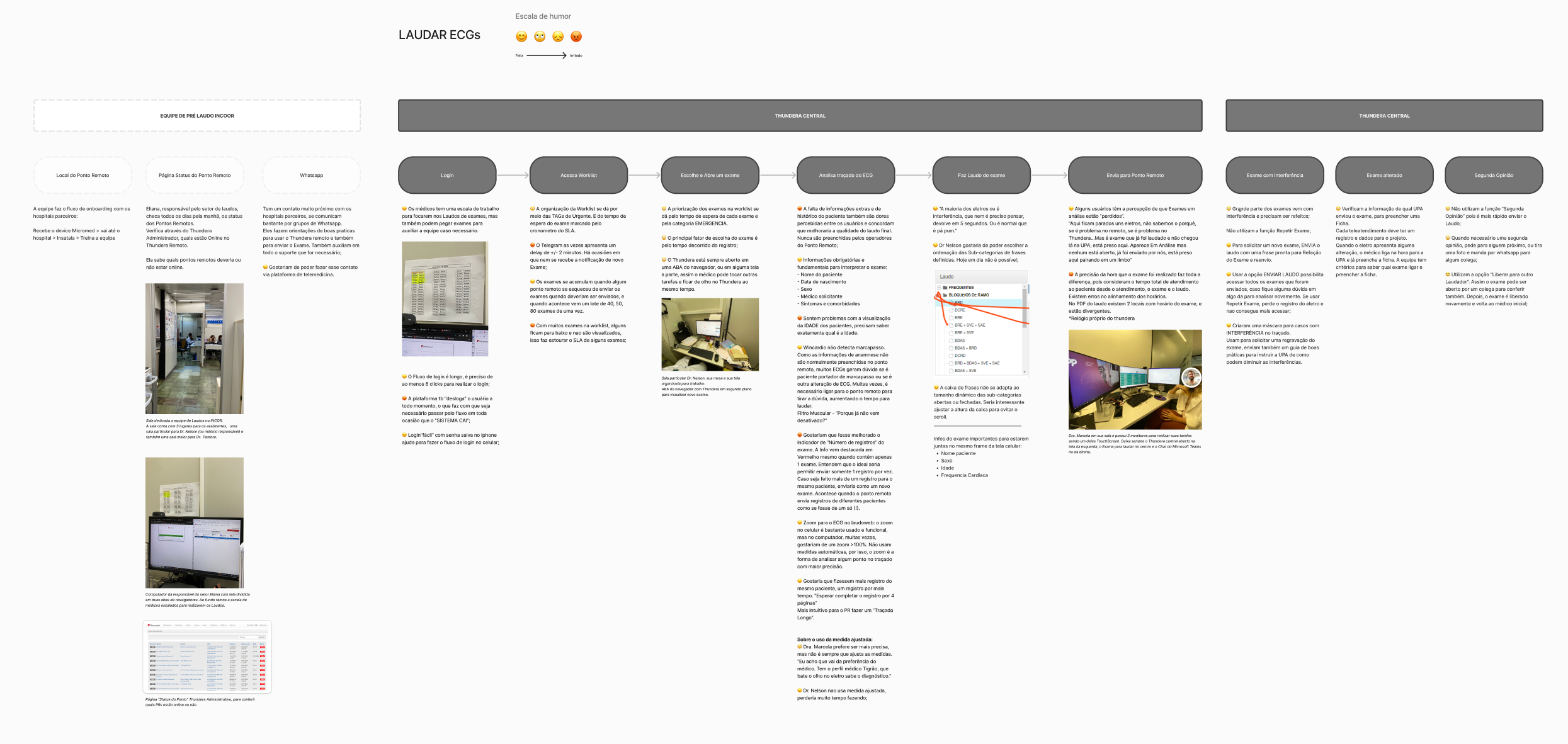
image user journeys

(Photos of hospitals visited, showing staff rooms and desks/work environment)

Some key Insights

  • The Continuous Flow: Doctors desired an automatic "next exam" dynamic, without having to return to the main list.
  • Critical Data: Information such as Age, Sex, and Heart Rate are fundamental for interpretation and needed greater prominence.
  • The "Tigrão Doctor": Experienced doctor profile seeking extreme speed; for them, the system should be as agile and direct as possible.

04.

The solution

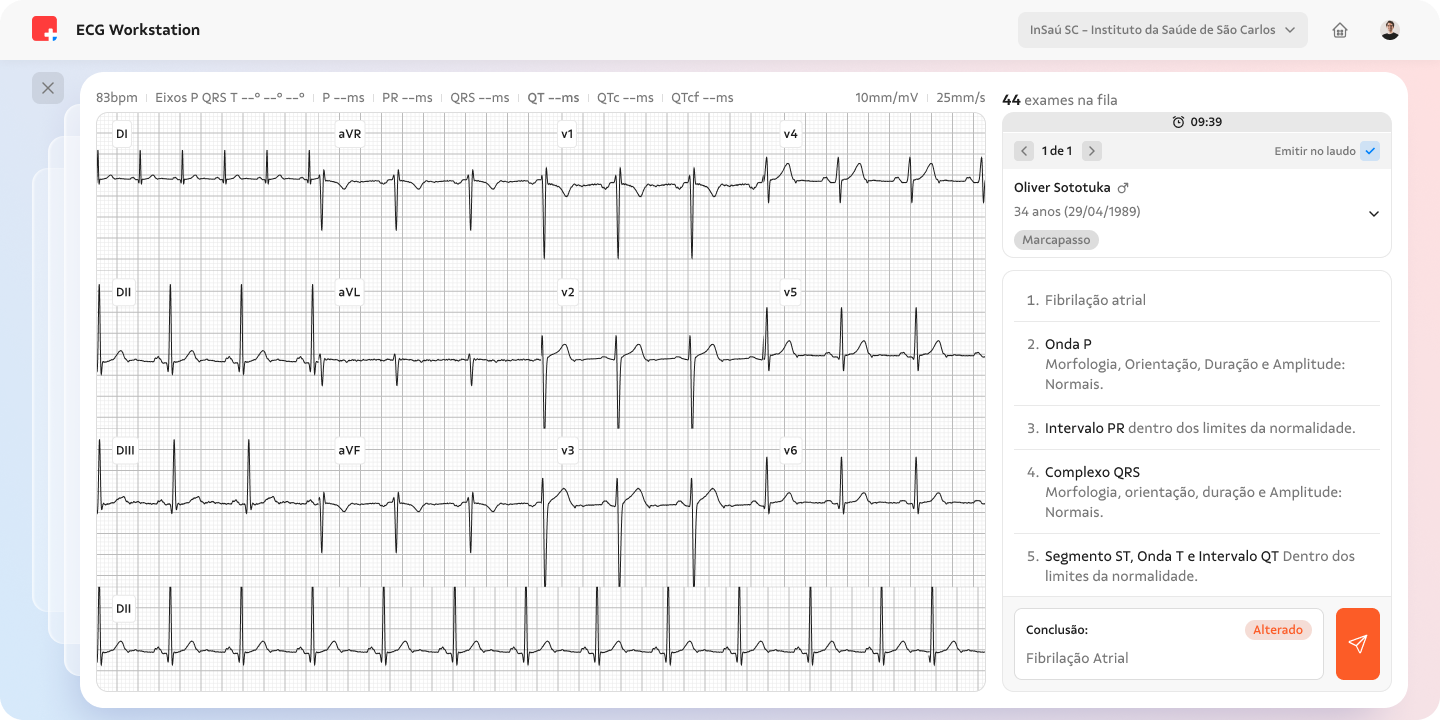
We designed the new workstation focusing on performance, clarity, and predictability.

Pillars of the New Interface

  • Click Optimization: Drastic reduction in steps for submitting normal reports (higher volume).
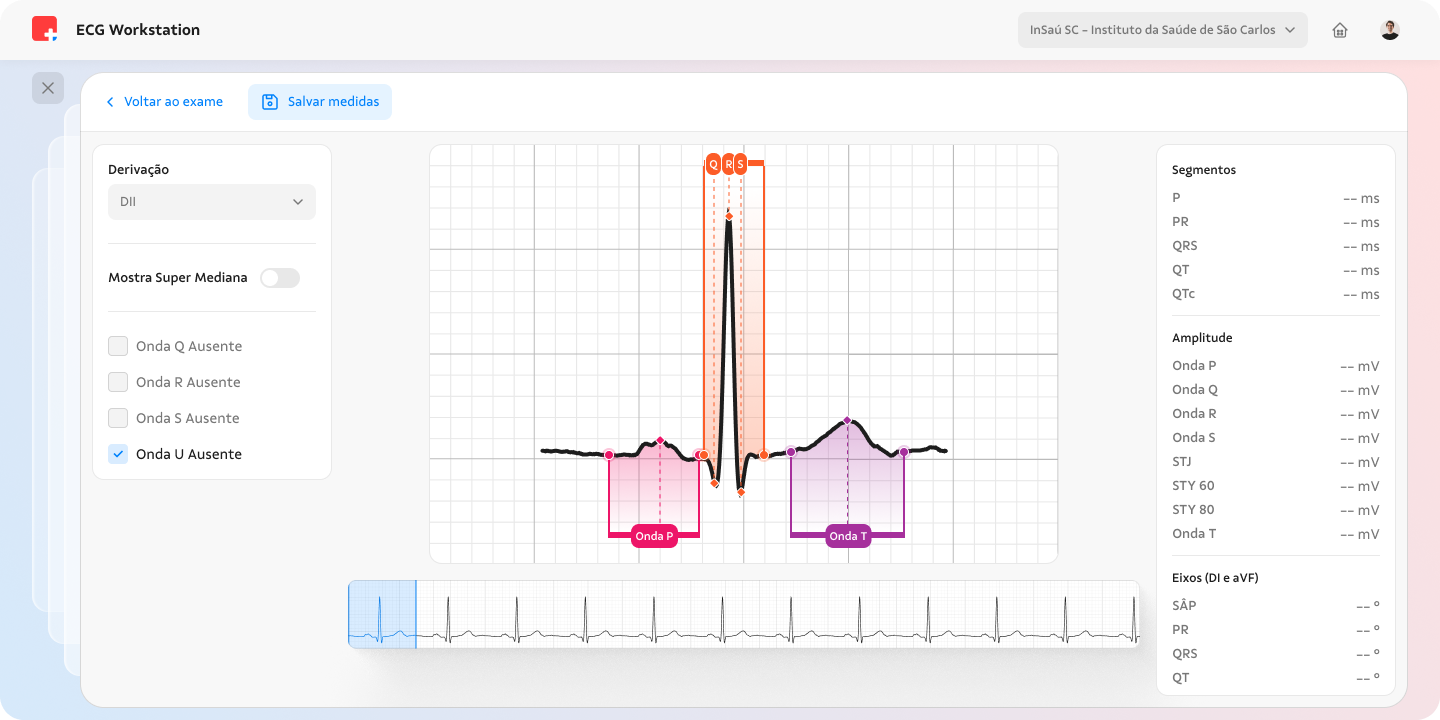
  • Visual Hierarchy: Patient data and ECG tracing gained prominence, with enhanced zoom tools.
  • High-Demand Workflow: Implementation of the sequential reporting mode to optimize work in large centers.
  • Pre-analysis AI: Training and implementation of Micromed's own AI for screening exams and ordering worklists.

05.

Validation and Iteration

To ensure the effectiveness of the solution, we conducted rigorous testing cycles:

Usability tests:

8

Tests performed

8

SUS Forms

Usability Tests: 8 remote sessions with doctors performing real tasks.
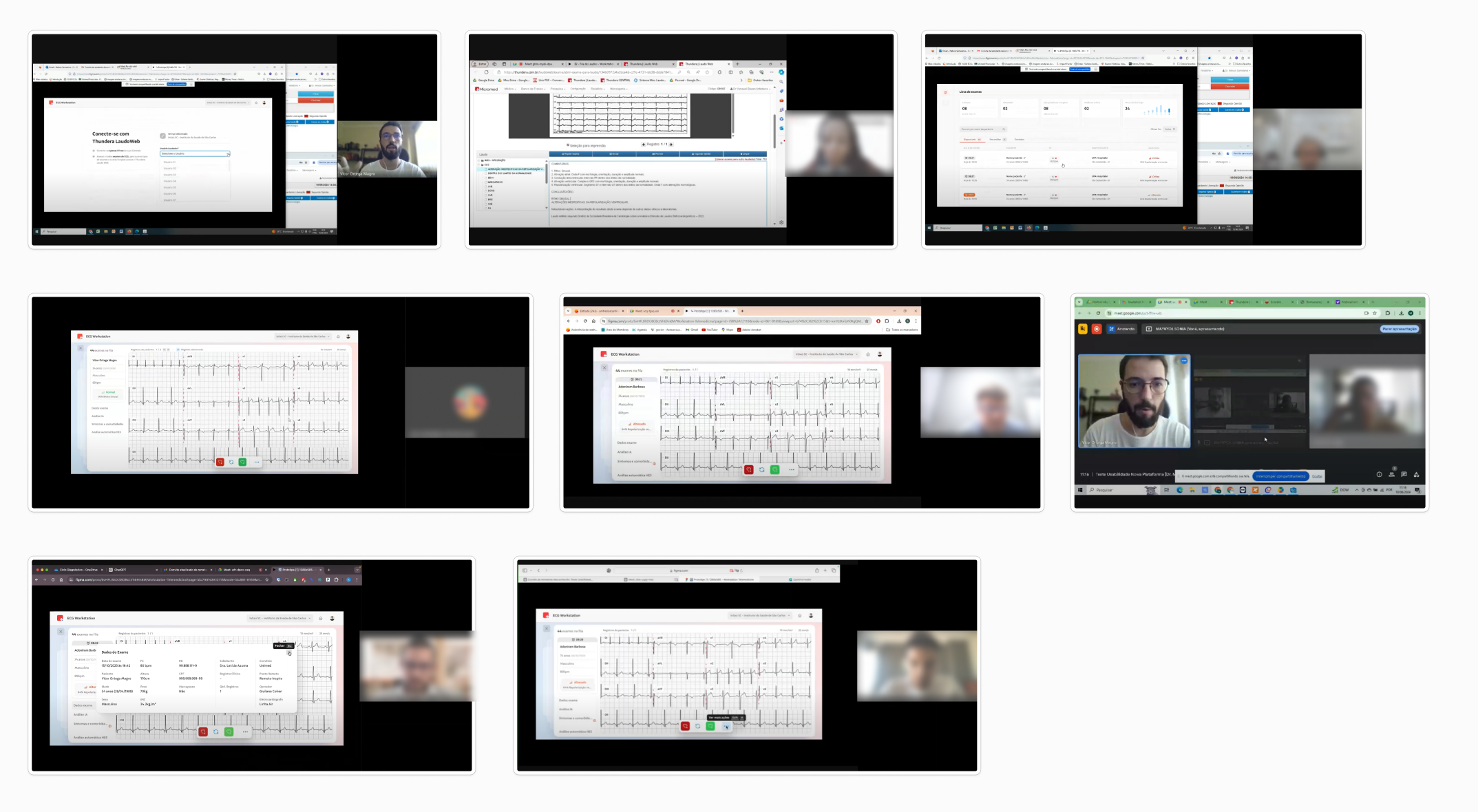
users testing

(Photos of hospitals visited, showing staff rooms and desks/work environment)
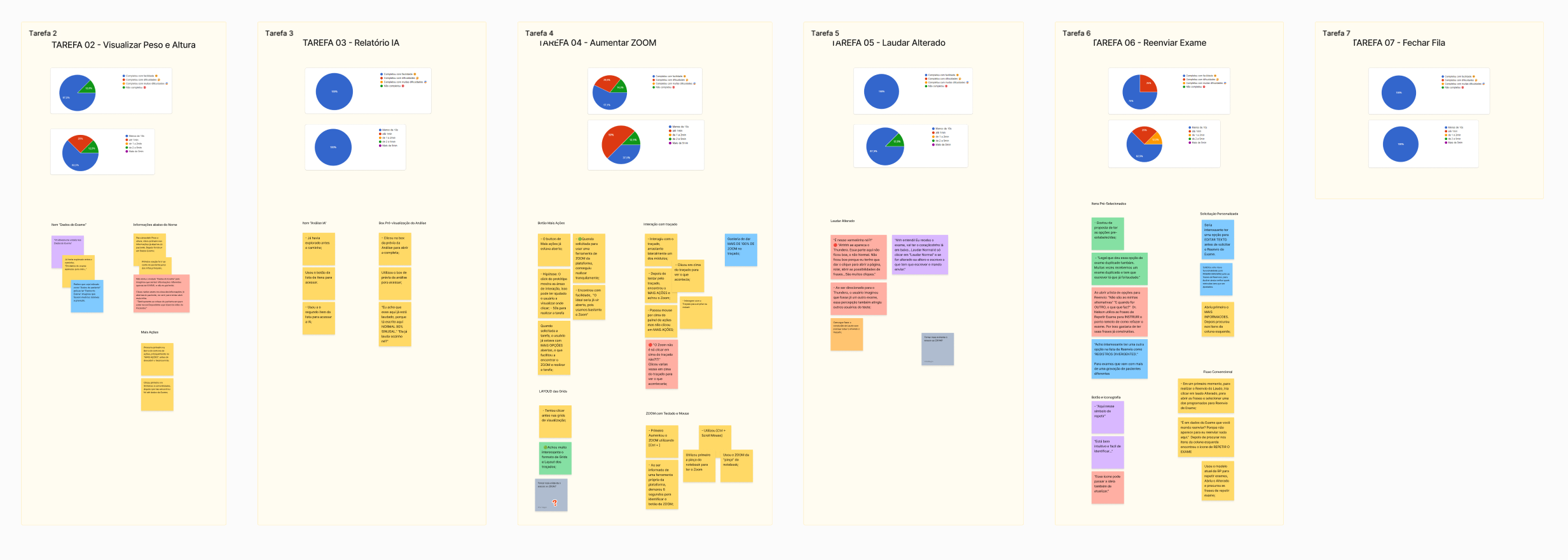
charts of usability test

(Charts, results, and insights from completed tasks.)

Success Metrics: Application of the SUS (System Usability Scale) questionnaire to measure usability perception.
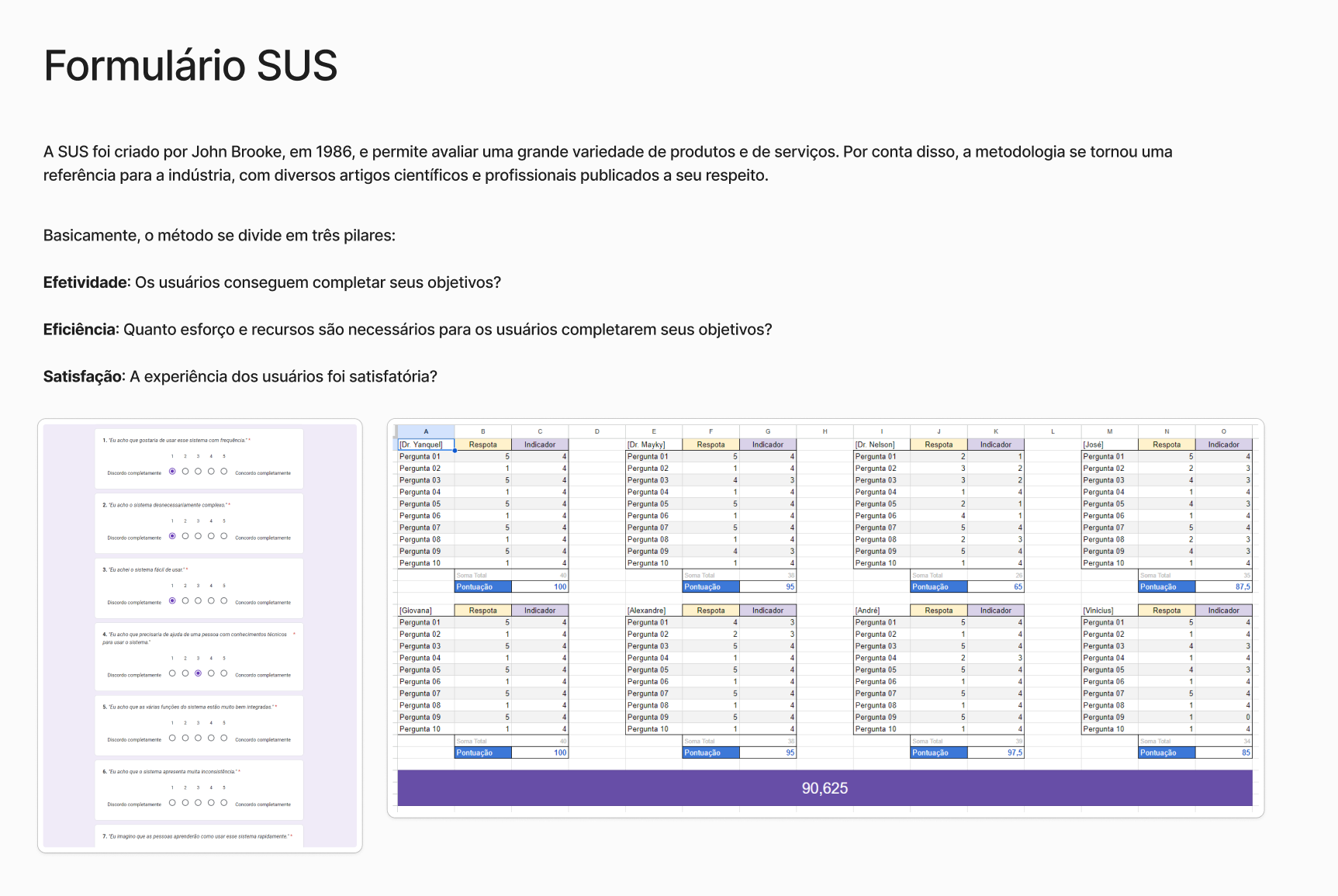
SUS form

(Results from the SUS form and tabulation of data by user.)

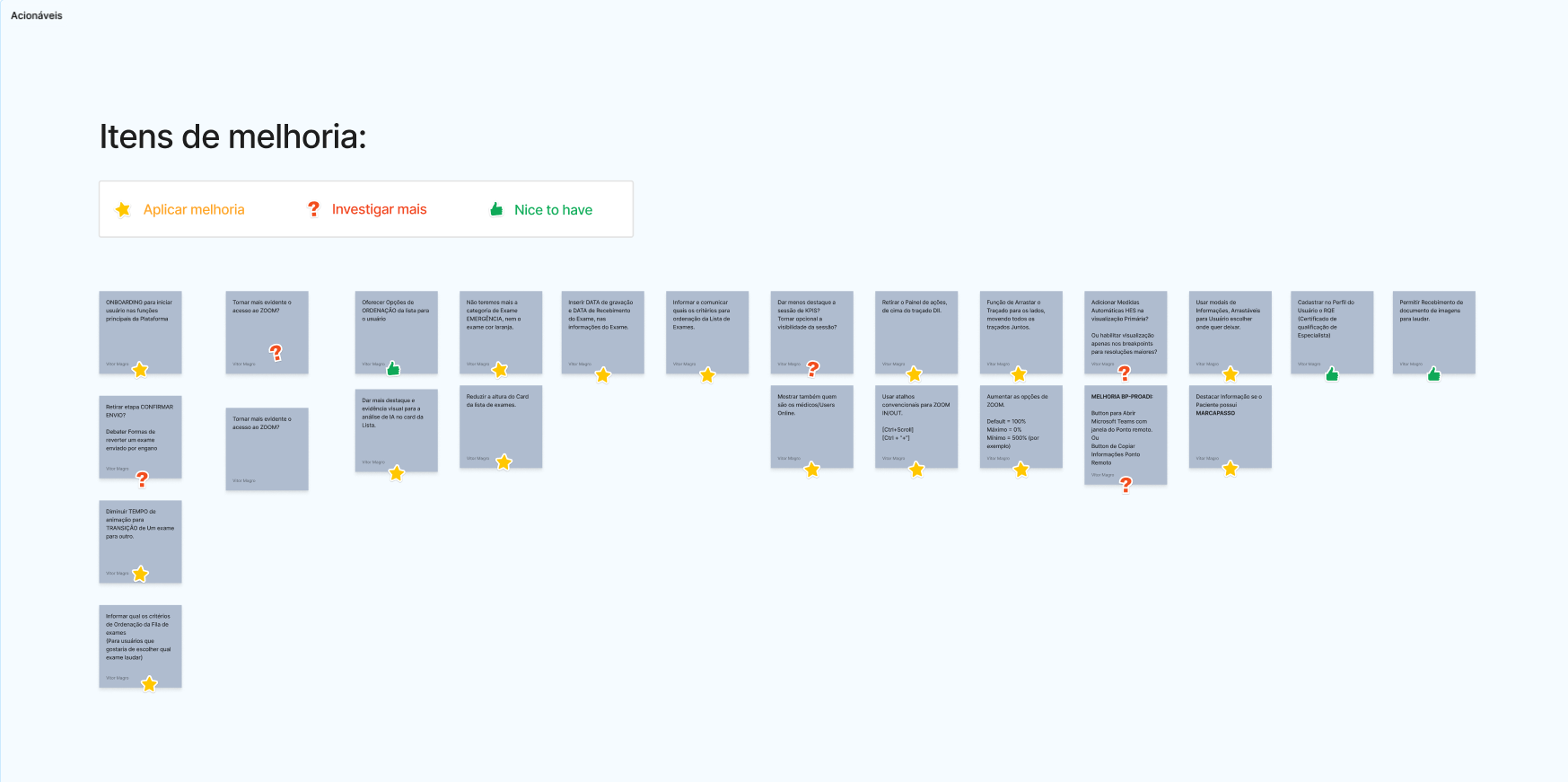
Design Adjustments:

Design Adjustments: We refined the ready-made phrase box and the signaling of exams with interference after feedback from tests.


Beta Test: Controlled launch at Beneficência Portuguesa for validation in a real, high-pressure environment.
Adjustments image

06.

User Interface

Controlled launch at Beneficência Portuguesa for validation in a real, high-pressure environment.
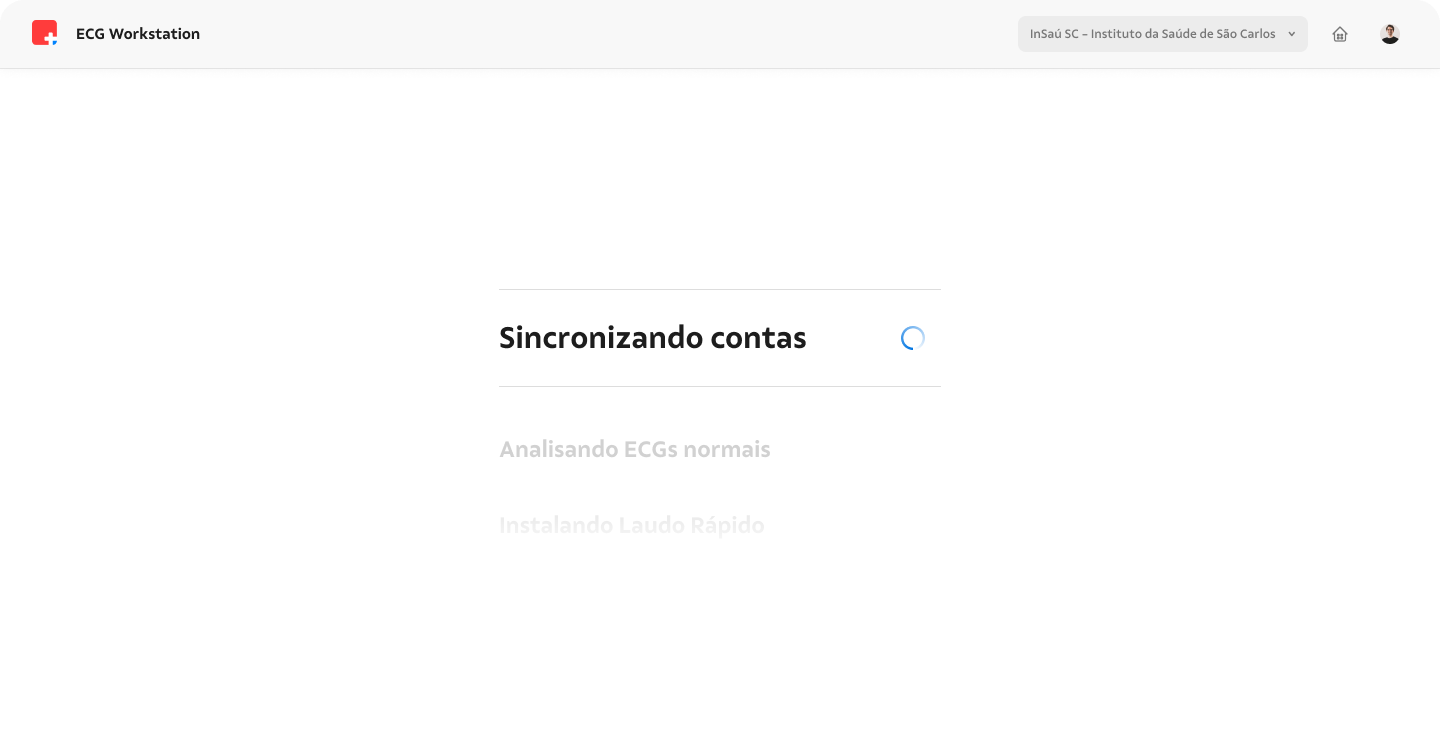
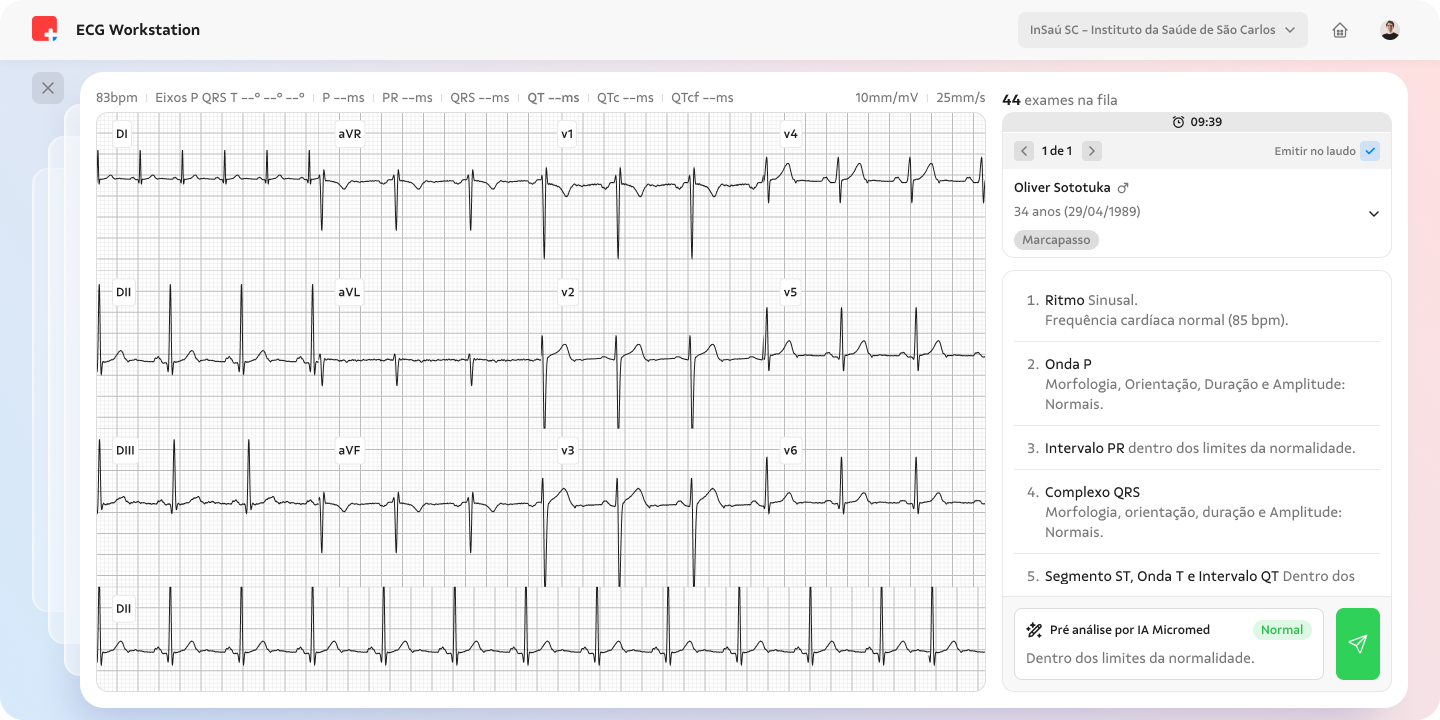
UI Workstation2
UI Workstation2
UI Workstation2

07.

Beta Test

The beta test was conducted with cardiologists at Beneficência Portuguesa, comparing the previous platform with the new Workstation.


The results validated the core goal of the project: significantly reducing report turnaround time.

38%

Within 5 seconds: a total leap in efficiency

From 0%

TO 38%

233%

Normal reports completed within 10 seconds

From 21%

TO 71%

21%

Normal reports completed within 10 seconds

From 21%

TO 71%

63%

Reduction in expired SLAs for critical reports

Parameters:

10/14/2024 to 11/12/2024, tested by 18 of 42 doctors, 62,850 reports issued during the period, 2,984 in the new interface.

Vitor Ortega Magro

Senior Product Designer from São Carlos

New ECG workstation

Design of a new, modern, and optimized workstation, aligning clinical needs, operational efficiency, and technological advancements at Micromed.

YEAR

2024

COMPANY

Micromed

ROLE

Research

User interviews

Journey maps

Data analysis

UI

Prototyping

Usability tests

Reffining

Beta testing

Follow UP

01.

Overview

Micromed is a leading player in cardiology in Brazil. This project involved the complete replacement of the legacy Thundera platform with a new workstation for medical reports. The goal was to modernize the technology and, most importantly, to solve critical usability issues that impacted medical efficiency.

+1200

Doctors on platform

2.5mi

Exams per year

+450

Centers reporting exams

02.

The Challenge

In cardiology, "time is muscle". Doctors deal with thousands of exams daily, and every second saved in the reporting process directly impacts patient response time.

The Problem

The previous platform presented:

  • Legacy Technology: Difficulty and high cost to implement improvements.
  • Workflow Friction: An average of 6 clicks to perform a simple report.
  • Cognitive Load: Outdated interface, making it difficult to prioritize critical exams.
  • Instability: Frequent logouts required repetitive authentication workflows.

Key Metric: Reduce the average reporting time while maintaining clinical safety.

data analysis

(Data dashboard in Figjam with charts, heatmaps, and key usage numbers.)

03.

Discovery Process

We began with a deep dive into the telemedicine ecosystem, visiting and interviewing doctors at reference institutions: Albert Einstein, Beneficência Portuguesa (BP), InCor, and Samaritano.

table discovery methods

User interviews

8

Users interviewed

4

Hospitals visted

5

Days shadowing

images of interviews

(Photos of hospitals visited, showing staff rooms and desks/work environment)

image user journeys

(Photos of hospitals visited, showing staff rooms and desks/work environment)

Some key Insights

  • The Continuous Flow: Doctors desired an automatic "next exam" dynamic, without having to return to the main list.
  • Critical Data: Information such as Age, Sex, and Heart Rate are fundamental for interpretation and needed greater prominence.
  • The "Tigrão Doctor": Experienced doctor profile seeking extreme speed; for them, the system should be as agile and direct as possible.

04.

The solution

We designed the new workstation focusing on performance, clarity, and predictability.

Pillars of the New Interface

  • Click Optimization: Drastic reduction in steps for submitting normal reports (higher volume).
  • Visual Hierarchy: Patient data and ECG tracing gained prominence, with enhanced zoom tools.
  • High-Demand Workflow: Implementation of the sequential reporting mode to optimize work in large centers.
  • Pre-analysis AI: Training and implementation of Micromed's own AI for screening exams and ordering worklists.

05.

Validation and Iteration

To ensure the effectiveness of the solution, we conducted rigorous testing cycles:

Usability tests:

8

Tests performed

8

SUS Forms

Usability Tests: 8 remote sessions with doctors performing real tasks.

users testing

(Photos of hospitals visited, showing staff rooms and desks/work environment)

charts of usability test

(Charts, results, and insights from completed tasks.)

Success Metrics: Application of the SUS (System Usability Scale) questionnaire to measure usability perception.

SUS form

(Results from the SUS form and tabulation of data by user.)

Design Adjustments:

We refined the ready-made phrase box and the signaling of exams with interference after feedback from tests.

Adjustments image

06.

User Interface

Controlled launch at Beneficência Portuguesa for validation in a real, high-pressure environment.
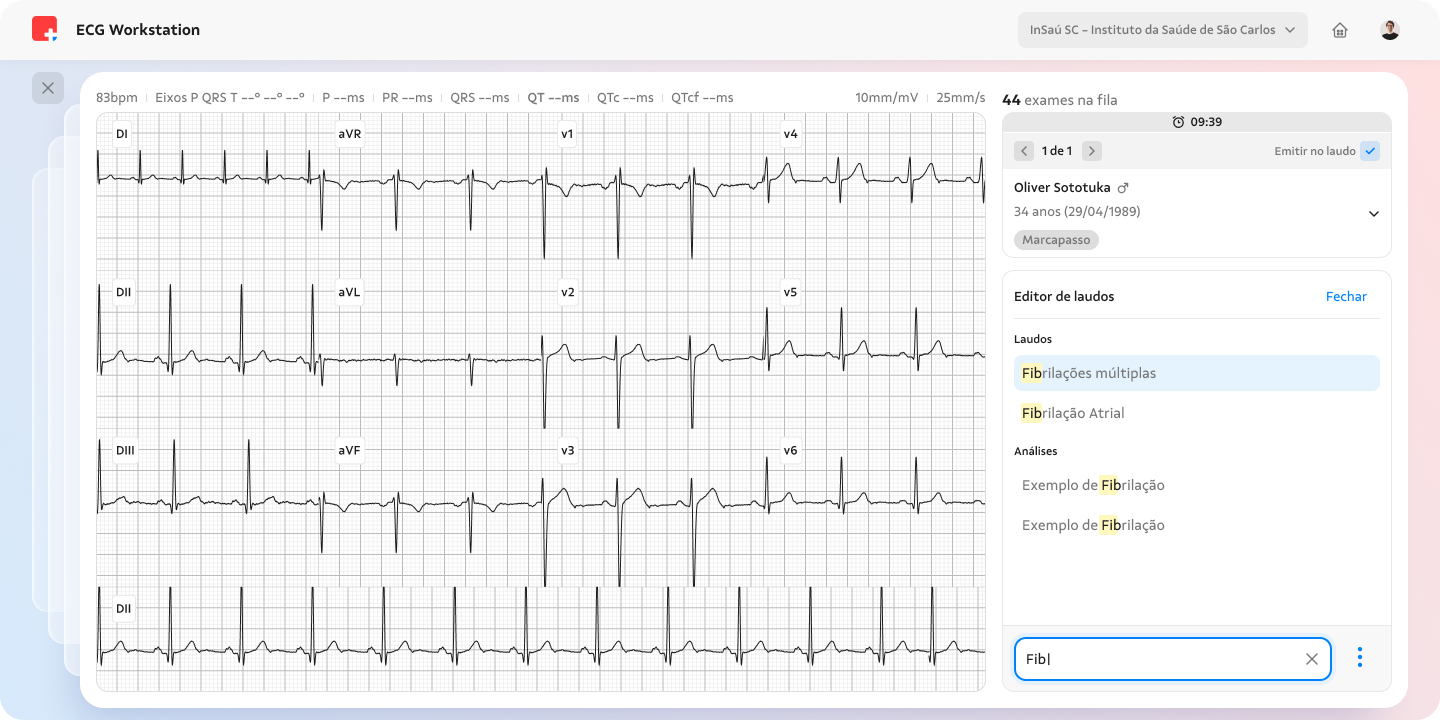
UI Workstation2
UI Workstation2
UI Workstation2

07.

Beta Test

The beta test was conducted with cardiologists at Beneficência Portuguesa, comparing the previous platform with the new Workstation.


The results validated the core goal of the project: significantly reducing report turnaround time.

38%

Within 5 seconds: Increased from 0% to 38% (a total leap in efficiency).

From 0%

TO 38%

233%

Normal reports completed within 10 seconds

From 21%

TO 71%

21%

Altered and critical reports completed within 30 seconds

From 42%

TO 51%

63%

Reduction in expired SLAs for critical reports

Parameters:

10/14/2024 to 11/12/2024, tested by 18 of 42 doctors, 62,850 reports issued during the period, 2,984 in the new interface.