logo

Redesign Ok Roger

Simplifying Corporate Travel Management

YEAR

2025

COMPANY

Ok Roger

ROLE

Information Architecture

User Flows

UI Design

Style Guide

01.

Overview

OK Roger is a B2B platform focused on simplifying travel management for organizations. The core objective is to allow administrators to set up policies, manage approvals, and track expenses efficiently ("set-it-and-forget-it").


This project was a conceptual redesign exercise aimed at demonstrating Information Architecture, UX, and UI skills, transforming a complex interface into an intuitive and visually appealing experience.

02.

The Challenge

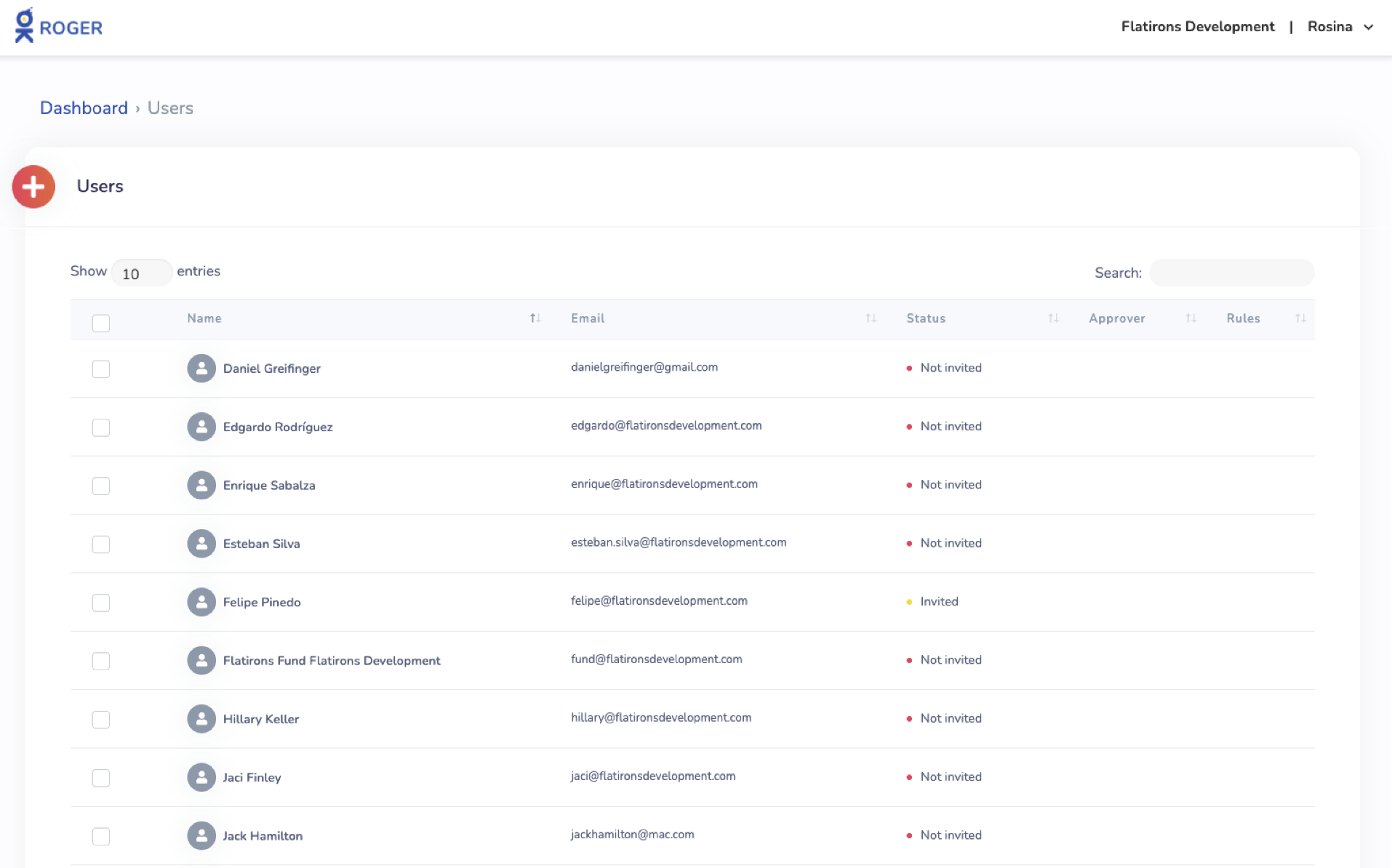
The original version of the platform had not undergone a professional design process. New features were added over time without a holistic vision, resulting in:

The Problem

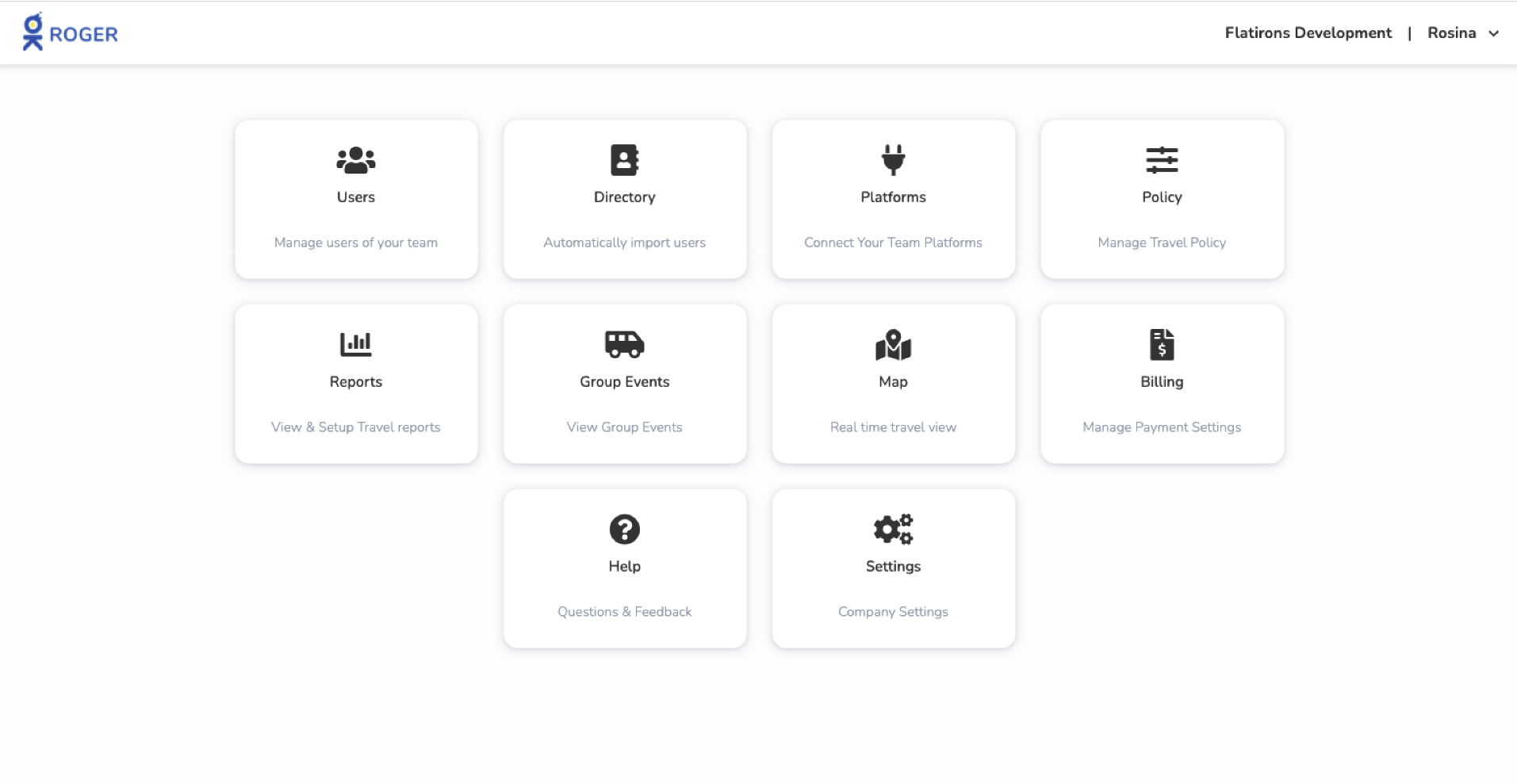
  • Confusing Information Architecture: Difficulty understanding how to manage members and policies.
  • Dated Interface: Lack of visual clarity and hierarchy.
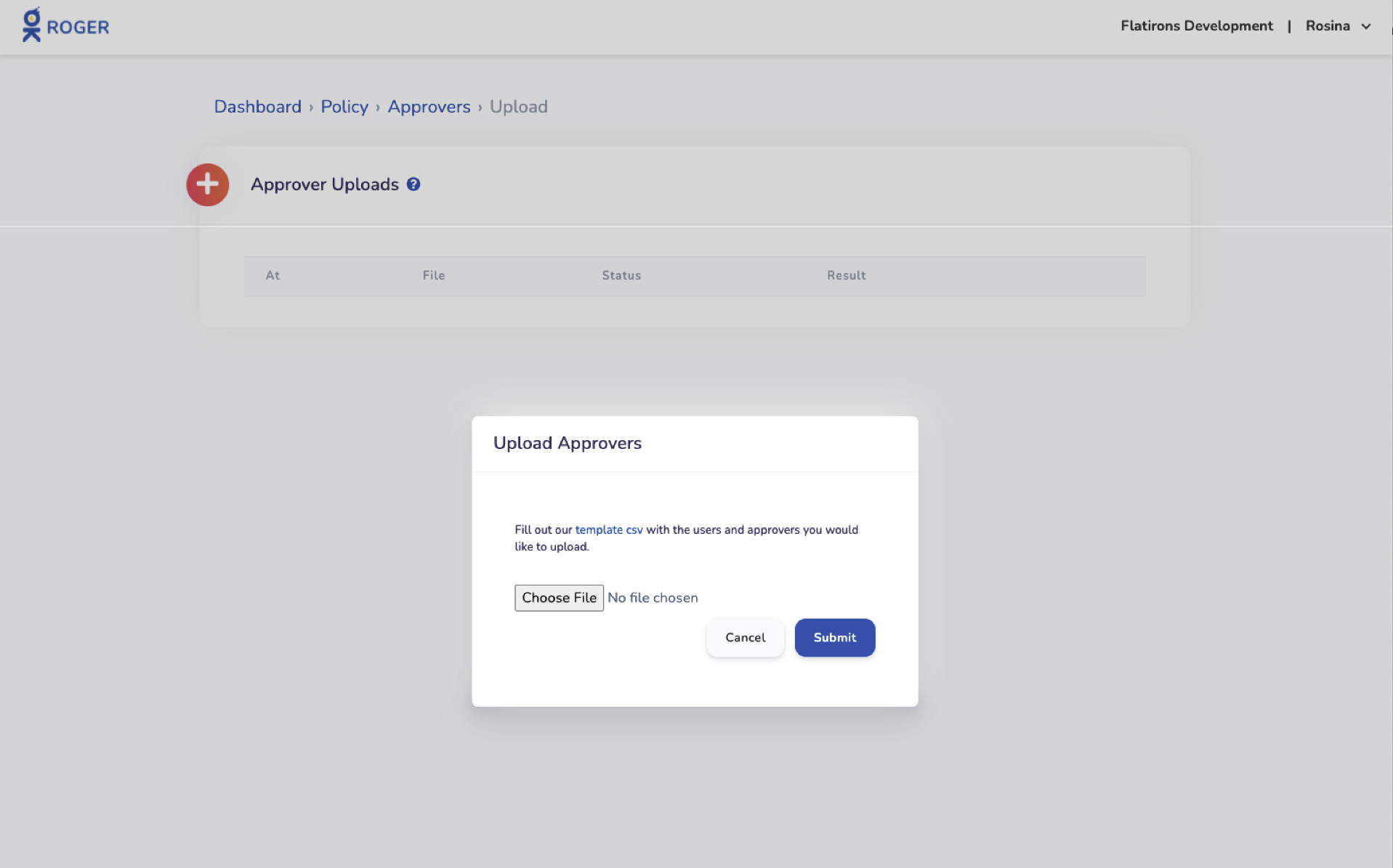
  • Complex Flows: Unintuitive approval processes and rule configurations.

Exercise Goals:

  1. Restructure the Information Architecture.
  2. Design a Dashboard that conveys control and clarity.
  3. Create a modern and "beautiful" interface.

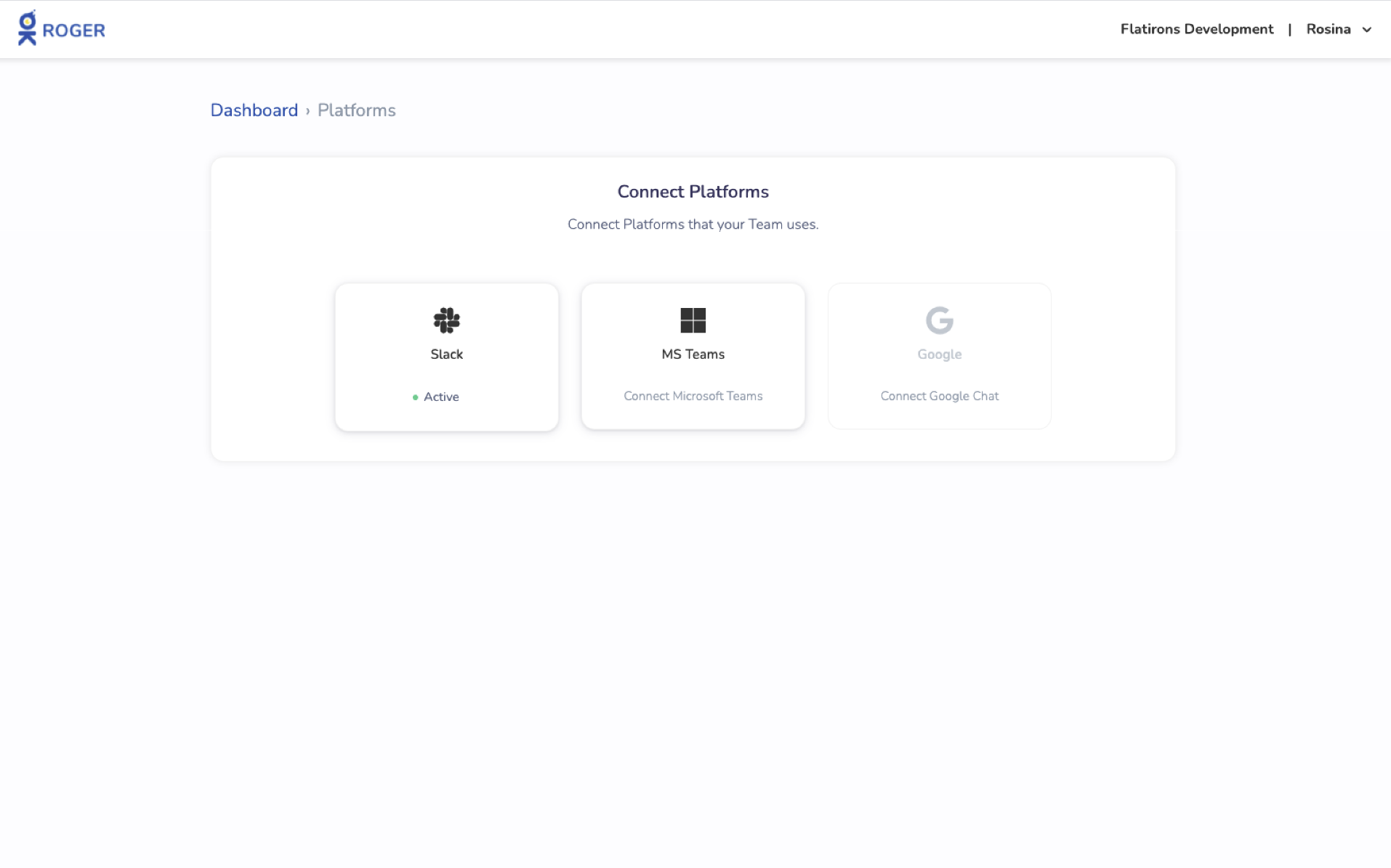
Original UI
03.

Design Process

Unlike projects with field research, the focus here was on UX sensibility and UI craft.

Steps:

  • Original Platform Analysis: Identification of bottlenecks in Dashboard, Policies, and User Management flows.
  • Information Architecture: Reorganization of page hierarchy to facilitate navigation.
  • User Flows: Optimization of core tasks (Adding Approvers, Creating Rules, Registering Users).
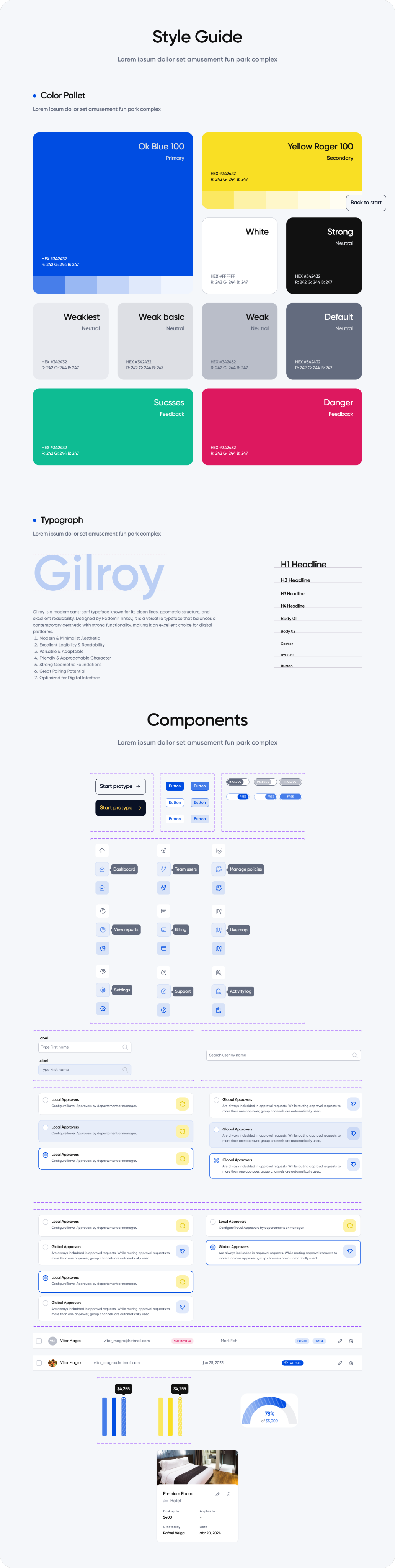
  • Design System: Creation of a modern style guide (Gilroy as the primary typeface, technological color palette).

04.

Solutions and Improvements

We designed the new workstation focusing on performance, clarity, and predictability.

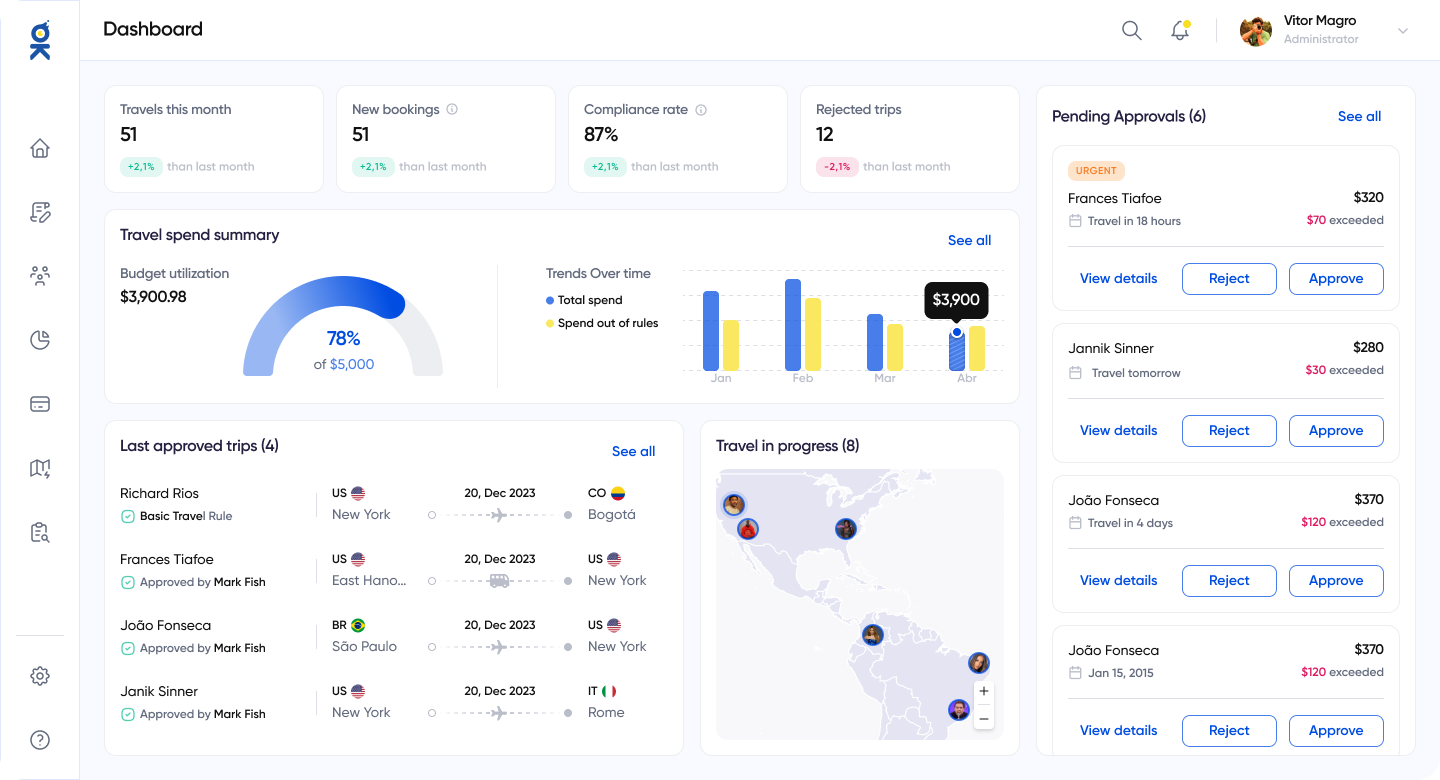
Main Dashboard

  • KPI Visualization: Introduction of charts for quick absorption of spending information and trends.
  • Action-Oriented: Immediate highlight for trips pending approval, reducing administrator response time.

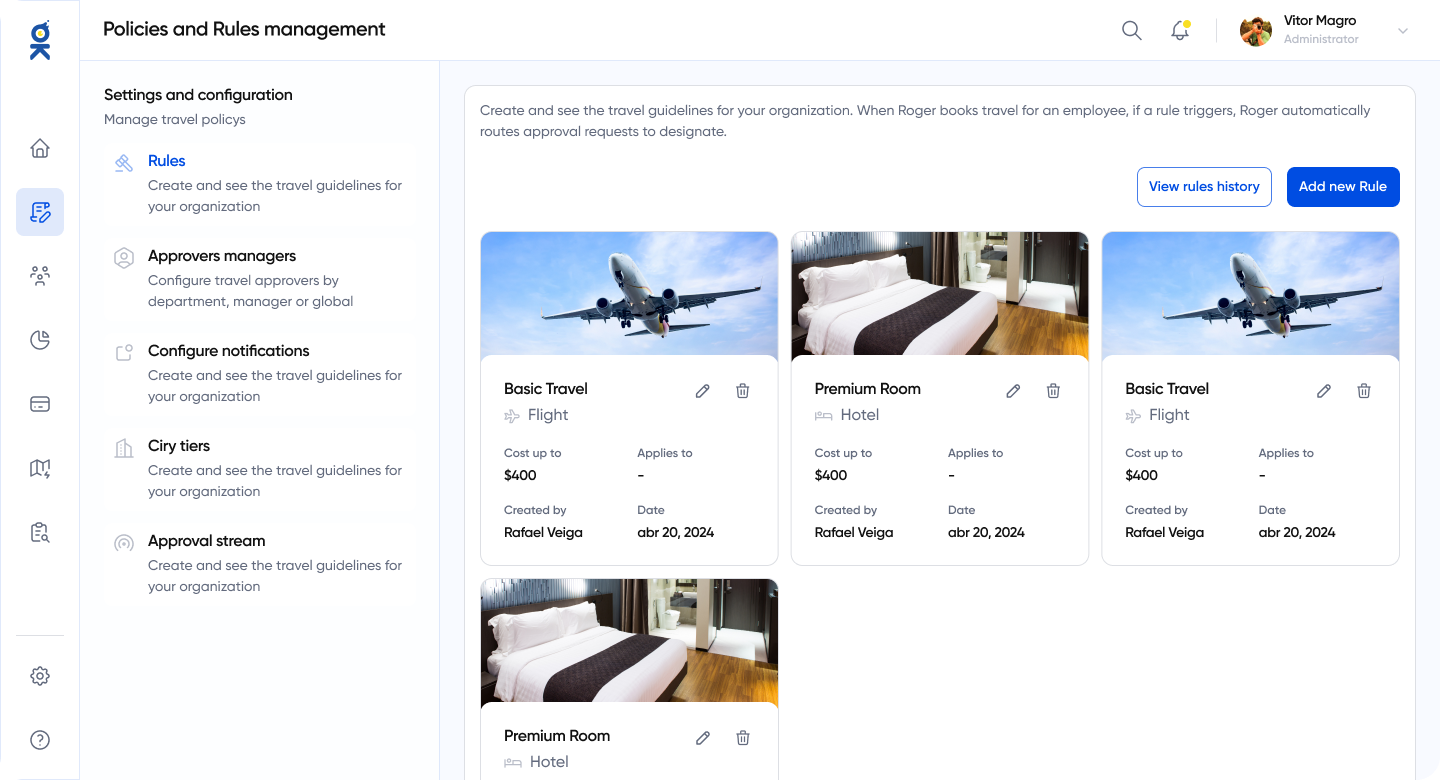
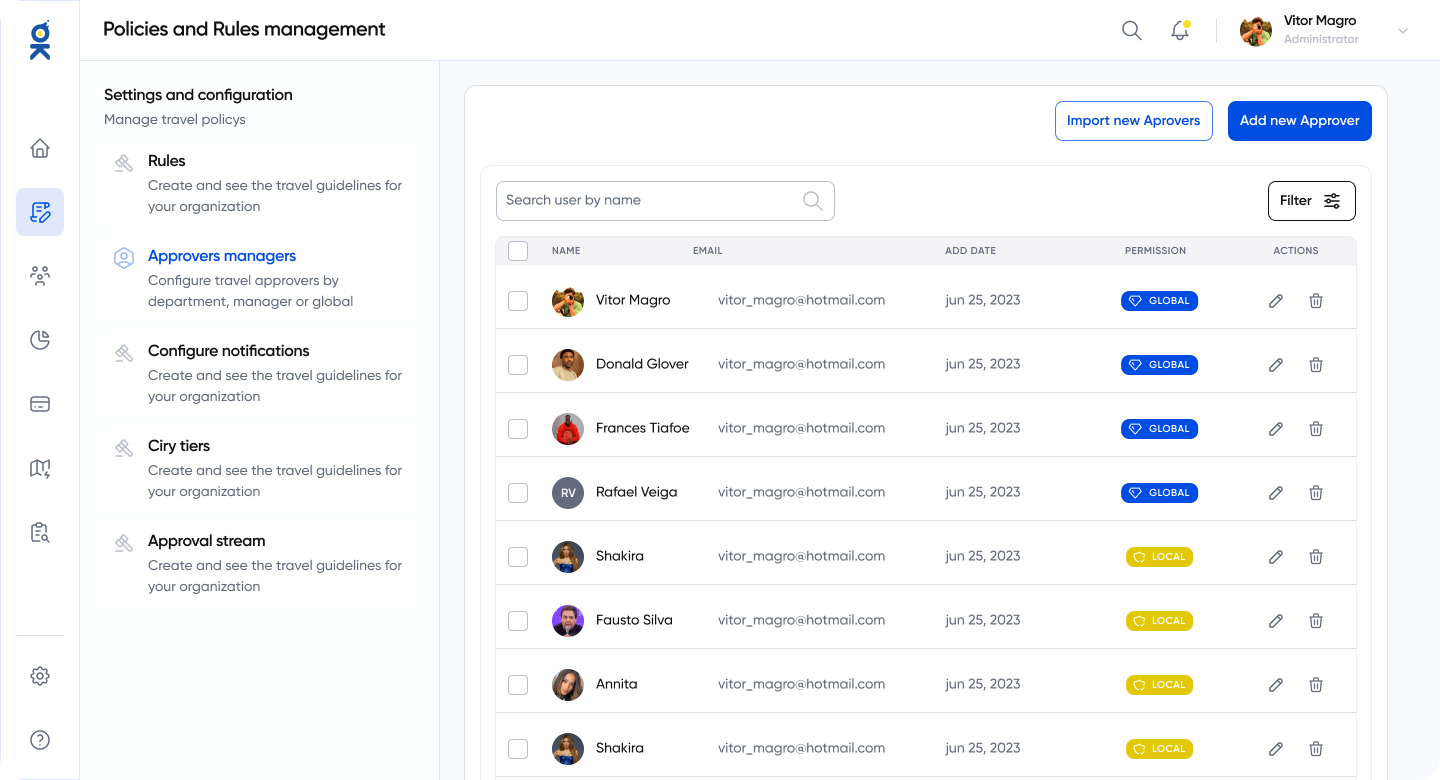
Policy and Approver Management

  • Rule Visualization: Enhanced interface for reading complex rules (e.g., spending limits by category).
  • Rule History: Suggestion to include history for greater control and auditing.
  • Approver Tags: Implementation of "Global" or "Local" tags to differentiate the scope of each approver.

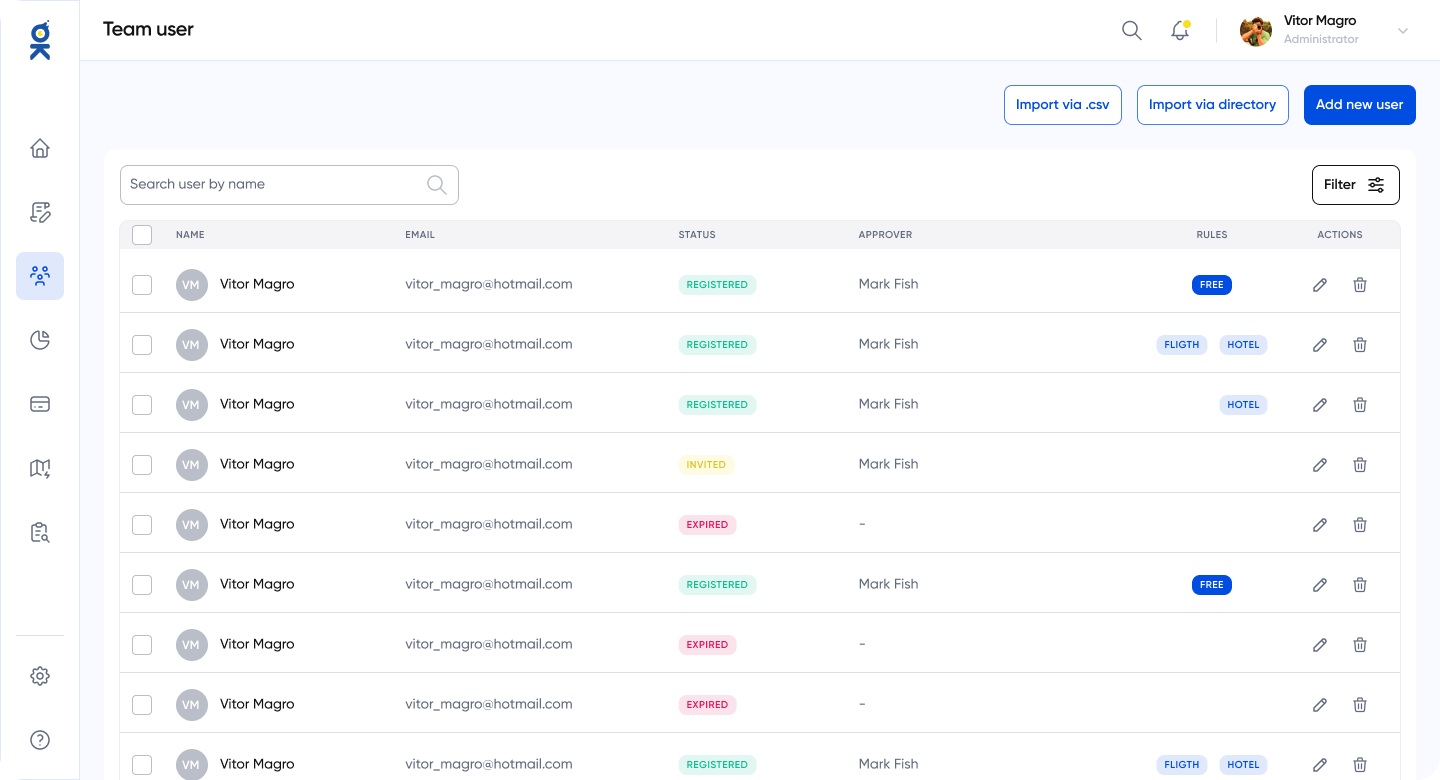
Team Management (Add New User)

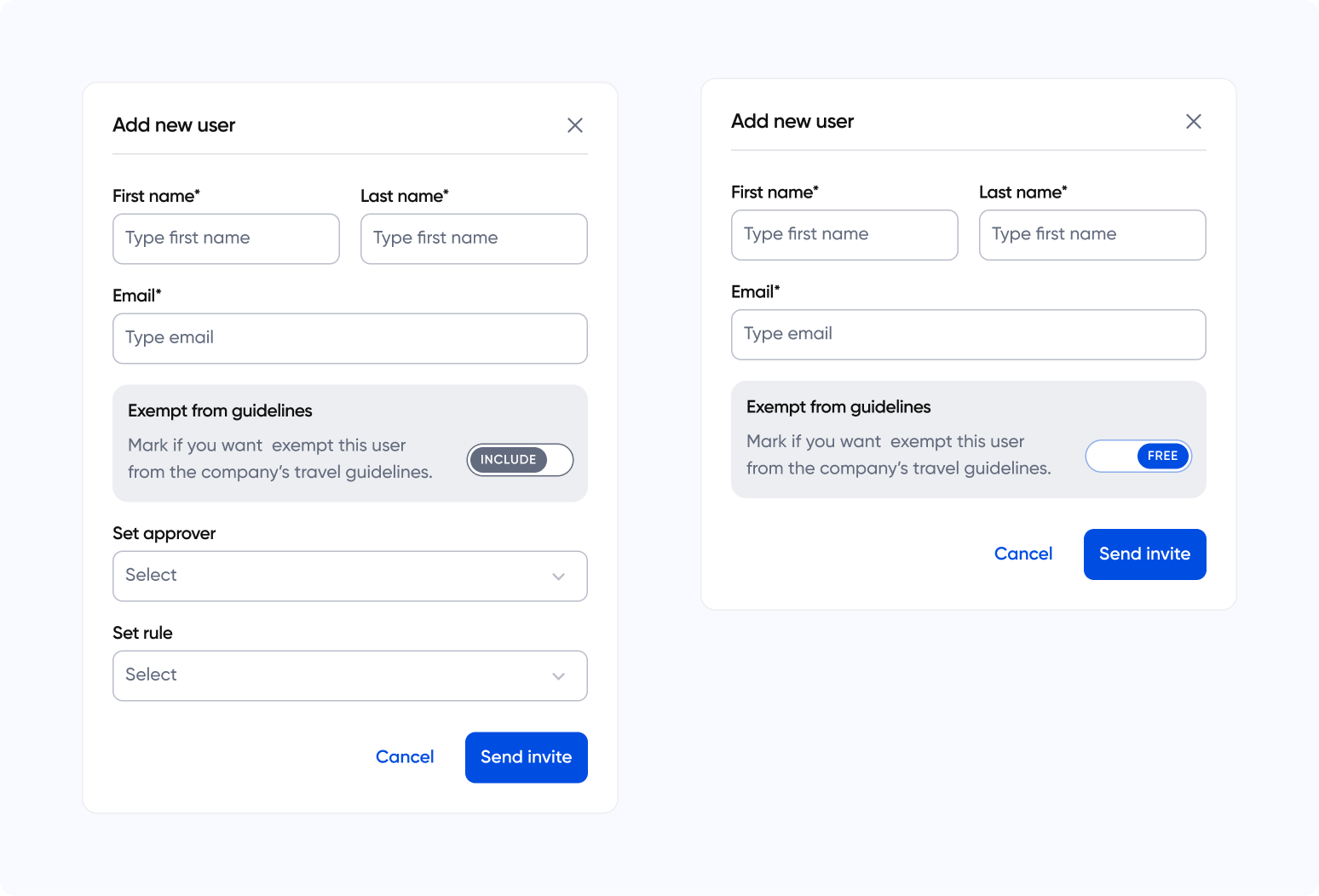
  • Rule Flexibility: New option to exempt specific users from company guidelines ("Exempt from guidelines"), allowing for greater customization for C-level roles or exceptions.

05.

Design System & Style Guide

To ensure scalability and consistency, a robust visual guide was developed:

06.

Conclusion

The OK Roger redesign demonstrates how applying solid design principles can transform a dense administrative tool into a high-usability platform. The focus on visual clarity and optimization of critical flows resulted in an experience that delivers the "total control" value promised by the product.

👋👋

Redesign Ok Roger

Simplifying Corporate Travel Management

YEAR

2025

COMPANY

Ok Roger

ROLE

Information Architecture

User Flows

UI Design

Style Guide

01.

Overview

OK Roger is a B2B platform focused on simplifying travel management for organizations. The core objective is to allow administrators to set up policies, manage approvals, and track expenses efficiently ("set-it-and-forget-it").


This project was a conceptual redesign exercise aimed at demonstrating Information Architecture, UX, and UI skills, transforming a complex interface into an intuitive and visually appealing experience.

02.

The Challenge

The original version of the platform had not undergone a professional design process. New features were added over time without a holistic vision, resulting in:

The Problem

  • Confusing Information Architecture: Difficulty understanding how to manage members and policies.
  • Dated Interface: Lack of visual clarity and hierarchy.
  • Complex Flows: Unintuitive approval processes and rule configurations.

Exercise Goals:

  1. Restructure the Information Architecture.
  2. Design a Dashboard that conveys control and clarity.
  3. Create a modern and "beautiful" interface.

Original UI
03.

Design Process

Unlike projects with field research, the focus here was on UX sensibility and UI craft.

Steps:

  • Original Platform Analysis: Identification of bottlenecks in Dashboard, Policies, and User Management flows.
  • Information Architecture: Reorganization of page hierarchy to facilitate navigation.
  • User Flows: Optimization of core tasks (Adding Approvers, Creating Rules, Registering Users).
  • Design System: Creation of a modern style guide (Gilroy as the primary typeface, technological color palette).

04.

Solutions and Improvements

We designed the new workstation focusing on performance, clarity, and predictability.

Main Dashboard

  • KPI Visualization: Introduction of charts for quick absorption of spending information and trends.
  • Action-Oriented: Immediate highlight for trips pending approval, reducing administrator response time.
Policy and Approver Management

  • Rule Visualization: Enhanced interface for reading complex rules (e.g., spending limits by category).
  • Rule History: Suggestion to include history for greater control and auditing.
  • Approver Tags: Implementation of "Global" or "Local" tags to differentiate the scope of each approver.
Team Management (Add New User)

  • Rule Flexibility: New option to exempt specific users from company guidelines ("Exempt from guidelines"), allowing for greater customization for C-level roles or exceptions.
05.

Design System & Style Guide

To ensure scalability and consistency, a robust visual guide was developed:
06.

Conclusion

The OK Roger redesign demonstrates how applying solid design principles can transform a dense administrative tool into a high-usability platform. The focus on visual clarity and optimization of critical flows resulted in an experience that delivers the "total control" value promised by the product.

👋👋